
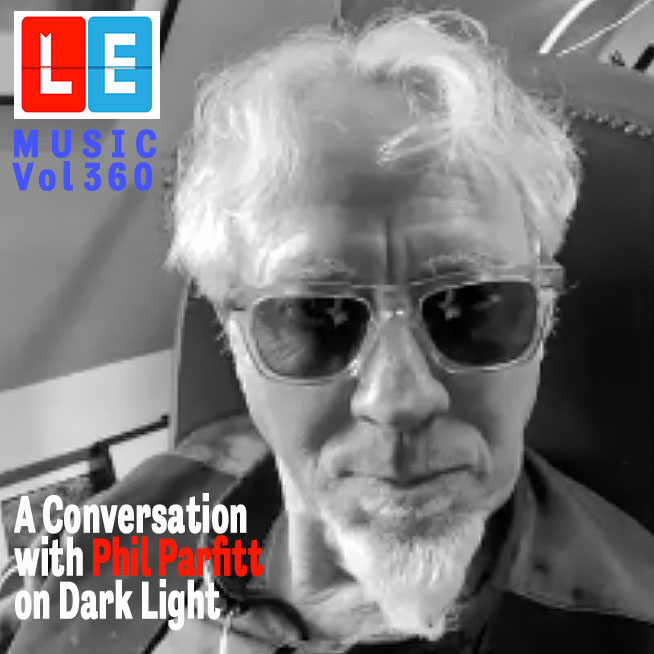
It’s not an act with Philip Parfitt, when his visage appears on the screen via Zoom, you’d be forgiven if you thought a character out of a Dickensian melodrama had emerged. The furrowed brow, the dark shades, silver tousled hair and pointy goatee, plus the dark clothes and an irreligious pendant all complete the Victorian guise. Yet, it’s Phil’s voice that brings a fictional eccentric figure to life. The unmistakable East London cadence, partly Peter Perret in a narcotic haze with a morsel of Anthony Newley doing his “I’m a cockney, mate” affectation. Phil doesn’t smile much, let alone laugh, all the same a rascally grin occasionally emerges. When responding to a question, he takes his time to respond, then shares a detailed, well-considered monologue. Philip Parfitt clearly enjoys talking about music and especially making his music. He’s a fan of the collaborators on his latest album, Dark Light. With potent enthusiasm he recounts the mechanics of creating this collection of deeply personal songs. The little asides he recalls are perfectly apt, “I like to go for walks alone, late at night, perhaps 3am, when it’s raining, through the cobblestone streets of the Medieval town where I live.” Parfitt conjures up another literary figure from bygone times, Victor Hugo.
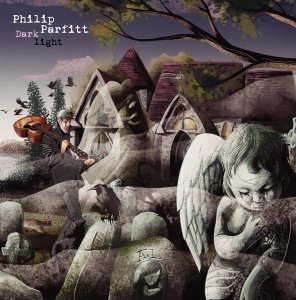 Philip Parfitt has had a long illustrious career, beginning as the founder/guitarist/vocalist and primary songwriter of the English bands The Varicose Veins, The Architects Of Disaster, Orange Disaster, The Perfect Disaster, Psychotropic Vibration, Oedipussy and Littleweed. Having been based in Sussex, Philip moved to an old mill in France and never stopped writing. In 2014 he released his organic and honest solo debut album I’m Not The Man I Used To Be. This was followed up by the critically acclaimed Mental Home Recordings. And now Philip Parfitt has released Dark light via Chicago/London/Paris based label Tip Top Recordings. It would be fair to say that all of Parfitt’s work is biographical, while Dark Light could be the most revealing. In describing the origins of his new collection of songs Phil is surprisingly guarded. Instead, he chooses to lavish well-deserved praise on his fellow musicians. To these ears, Dark Light is Parfitt’s most accomplished album to date. It’s beautifully arraigned and carefully produced. Yes, it’s emotive, but it’s more reflective than sad. These are songs Phil may not have been able to write before. There is history here. Philip Parfitt has found a confidence and discipline he may have been searching for. As with Charles Dickens’ meticulous attention to details and Victor Hugo’s mastery of pathos, Philip Parfitt has created an exceptional work in Dark Light.
LEM Vol 360
 Life Elsewhere